Why Thermal Management Is Now a Manufacturing Issue for EV Components

Thermal management has moved from a specialist engineering topic to a core manufacturing concern for electric-vehicle components.
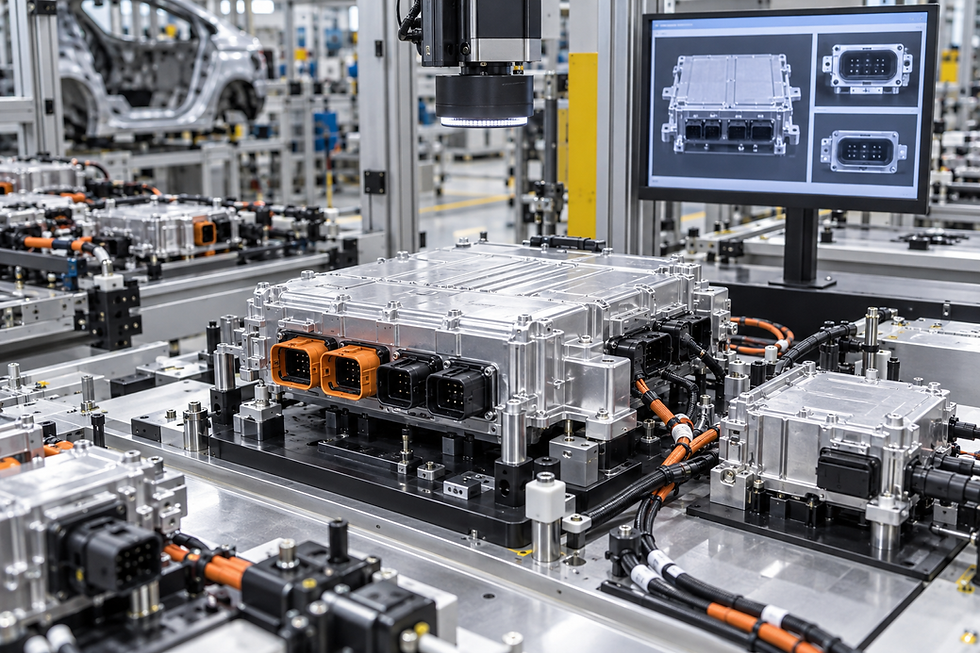
An EV powertrain creates heat in the battery pack, inverter, motor, charging system and the connectors that carry high-voltage current.
Every one of those systems depends on parts that can control heat, seal against contamination and remain dimensionally stable through repeated thermal cycles.
That changes the job of an automotive component manufacturer.
A bracket, housing, coolant plate or cover can no longer be considered only by its nominal shape.
Its surface finish, flatness, joint design and material behaviour may all affect the path taken by heat.
The most important question is often how a component behaves after thousands of heating and cooling events rather than how it looks on the first inspection.
Battery enclosures are a clear example.
They need to protect cells from moisture, debris and mechanical impact while allowing a thermal system to work consistently.
Small variations in sealing faces or fastening points can change compression on a gasket.
That can influence both water ingress resistance and cooling performance.
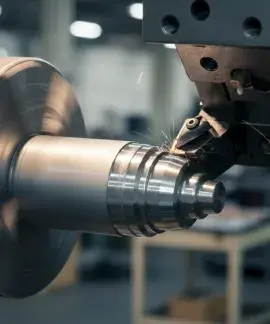
Machined interfaces therefore need a process plan that protects functional surfaces from tool wear, handling damage and uncontrolled finishing operations.
Cooling plates create another manufacturing challenge.
Their channels, ports and mating surfaces must support predictable flow without creating leak paths or excessive pressure loss.
The production team has to consider burr control, cleaning, pressure testing and traceable inspection as one connected process.
A successful leak test at the end is valuable.
A process that reduces the chance of a blocked channel or damaged seal before testing is even more valuable.
Material selection is equally important.
Aluminium alloys are common because they balance weight, thermal conductivity and manufacturability.
Yet the final result depends on details such as wall thickness, heat treatment, corrosion protection and how the material responds near threaded or sealed features.
Designers and manufacturing engineers need a shared view of those trade-offs.
The International Energy Agency notes in its Global EV Outlook 2026 that electrification continues to reshape vehicle demand and supply chains.
That makes production capability around thermal systems strategically important rather than a niche requirement.
Automotive manufacturers are also adapting their architectures for higher-voltage systems and more integrated electronics.
The IEA report is available at https://www.iea.org/reports/global-ev-outlook-2026 for readers tracking the broader transition.
For component teams, the practical consequence is tighter alignment between design intent and shop-floor control.
Inspection should focus on the characteristics that influence heat transfer, sealing and assembly.
Those may include flatness, surface texture, port geometry, torque retention and the cleanliness of internal passages.
A conventional dimensional report can miss the point if it does not confirm the features that matter in real operating conditions.
Digital simulation is helping teams make better decisions earlier.
Thermal models can identify likely hot spots before a prototype is machined.
Manufacturing feedback can then show whether a proposed geometry is practical to produce, inspect and clean at volume.
That exchange prevents a common problem in new vehicle programmes.
A design may perform well in theory but demand an unstable or overly expensive production process.
The automotive industry is dealing with cost pressure as well as technology change.
The AlixPartners 2026 Global Automotive Outlook describes a market where investment choices, supply risk and vehicle complexity are closely linked.
Its analysis can be found at https://www.alixpartners.com/newsroom/press-release-the-23rd-annual-alixpartners-global-automotive-outlook/.
Thermal-management components illustrate why manufacturing discipline matters in that environment.
A reliable process protects quality without adding unnecessary complexity.
It uses controlled work instructions, capable tooling, clear inspection criteria and realistic testing.
As EV programmes mature, the manufacturers that understand those connections will be better placed to turn thermal performance into repeatable production quality.
That is the real shift.
Heat is no longer only an engineering calculation.
It is a manufacturing outcome.
Comments